
Why Phonics Stories Are Perfect for Homeschooling
What if phonics lessons felt more like story time? Discover how story-based learning can help homeschool children develop strong reading and spelling skills while enjoying every page.
Clever Speller
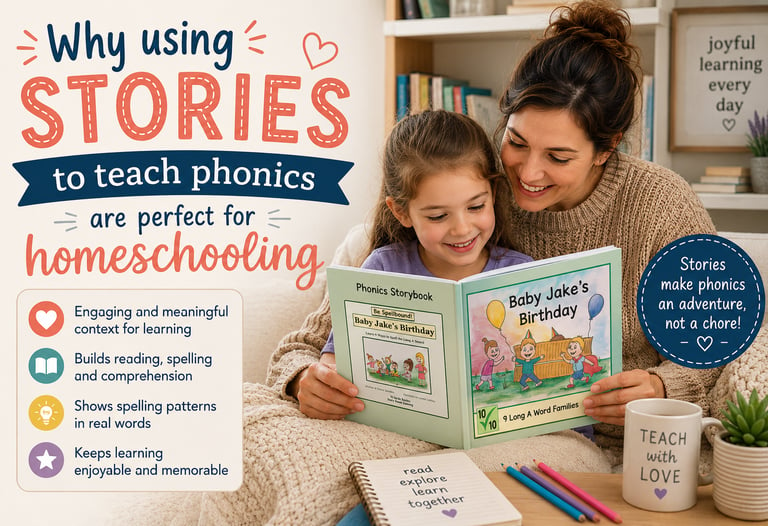
Have you ever sat down with your child to do a phonics lesson only to be met with glazed eyes, fidgeting, and a desperate search for anything more interesting to do? You're certainly not alone! Traditional phonics activities often involve endless lists of unrelated words that don't mean much to children. While these activities can have their place, they don't always inspire a love of reading and spelling.
This is one of the reasons why stories are such a wonderful way to teach phonics in a homeschooling environment. Children naturally love stories. They enjoy following characters, finding out what happens next, and becoming immersed in a meaningful context. When phonics patterns are woven into a story, children are exposed to target sounds and spelling patterns in a way that feels natural and engaging rather than repetitive and tedious.
Stories also help children understand that reading and spelling have a purpose. Instead of reading a list of words such as rain, train, snail, and paint, children encounter these words as part of an interesting tale. The words suddenly have meaning, making them easier to remember and much more enjoyable to practise.
Homeschooling families are in the perfect position to take advantage of story-based phonics learning. You can read together on the couch, discuss the story, look for words containing the target sound, and revisit favourite stories as often as needed. There is no pressure to rush through a program or keep pace with a classroom. Learning can happen naturally through conversation, shared reading, and enjoyable activities.
Another benefit is that stories allow children to see how sounds can be spelled in different ways. English spelling can be quite tricky, with many different spellings for the same sound. Carefully written phonics stories can highlight these spelling patterns in context, helping children develop stronger spelling skills while still enjoying a good story.
Most importantly, stories help keep the joy in learning. Homeschooling gives families the freedom to make learning meaningful, and using phonics stories is a simple way to combine reading, spelling, comprehension, and enjoyment all in one activity.
After all, if children are going to spend time learning phonics, why not make it an adventure rather than a chore?
Clever Speller: Making Reading and Spelling Meaningful, Memorable and Fun :)